
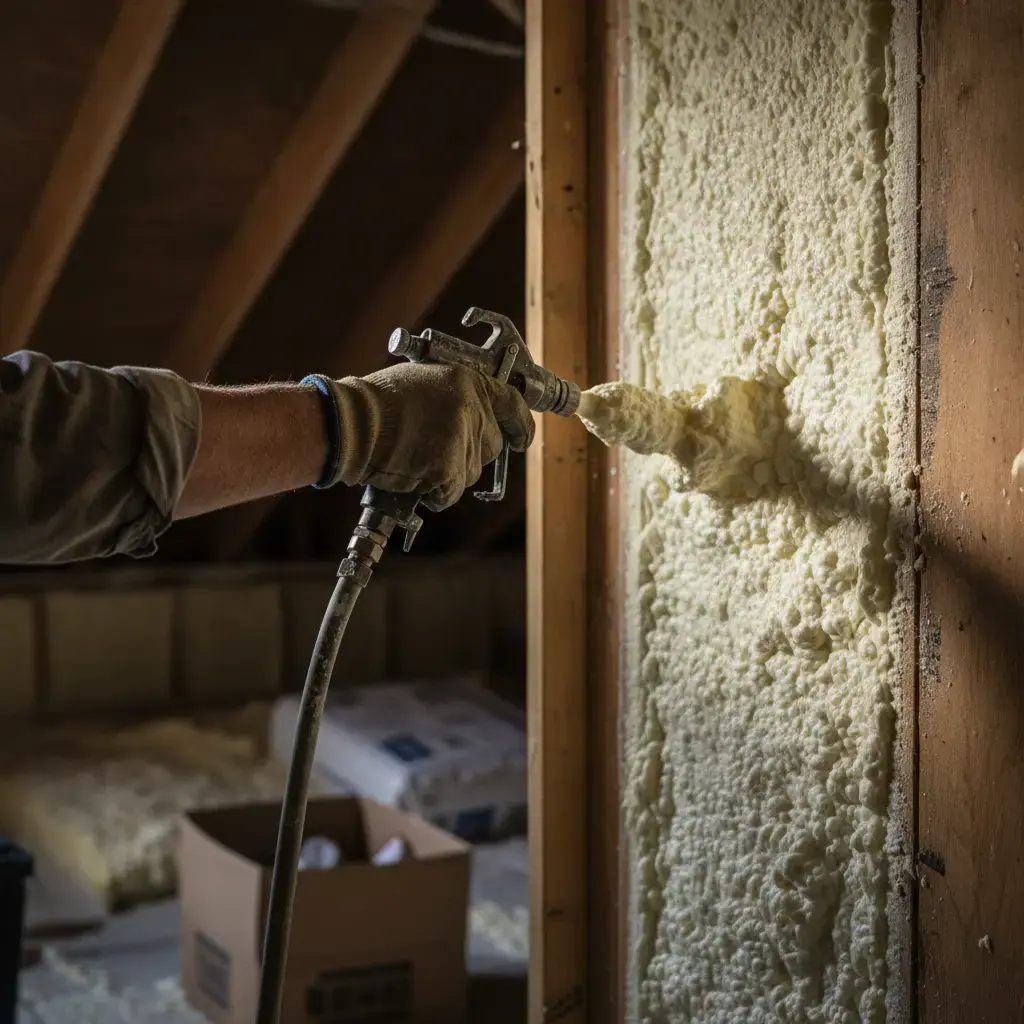
Rockwool Insulation in Signal Hill, CA
Energy-Saving Rockwool Insulation for Signal Hill, CA Homes — Licensed & Insured
Get expert Rockwool insulation in Signal Hill, CA. Clear Price Attic Insulation offers transparent pricing, Title 24 compliance & free quotes. Call (562) 784-7649.
Rockwool insulation — also known as mineral wool or stone wool insulation — is a premium, fire-resistant insulation material manufactured from volcanic basalt rock and recycled steel slag. Spun into dense, interlocking fibers, Rockwool delivers exceptional thermal performance, outstanding soundproofing, and superior moisture resistance that standard fiberglass batts simply cannot match.
At Clear Price Attic Insulation, we specialize in professional Rockwool insulation installation throughout Signal Hill, CA and the surrounding communities of the South Bay and Greater Long Beach areas. Signal Hill’s unique geography — a compact, elevated city of just 2.2 square miles sitting atop an oil-producing anticline — creates specific thermal bridging and air infiltration challenges that demand a high-performance insulation solution. Our experienced team understands the local building stock, climate patterns, and municipal codes to deliver results that make a measurable difference in your home’s comfort and energy bills. Call us today at (562) 784-7649 to schedule your free assessment.
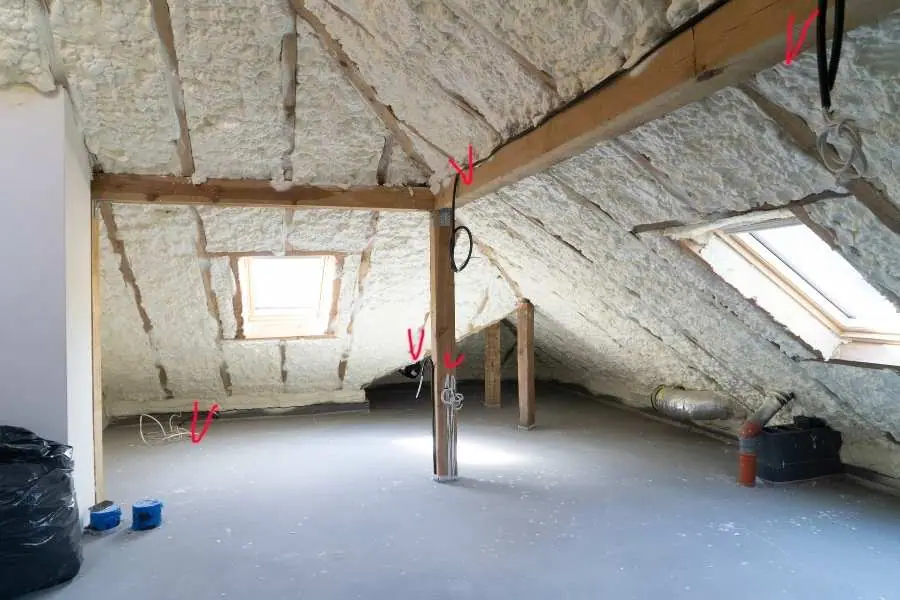
Understanding Rockwool Insulation
Rockwool insulation has its roots in Hawaii, where early settlers noticed that volcanic eruptions produced natural mineral wool fibers — nicknamed “Pele’s hair” — that possessed remarkable insulating properties. Industrial production of mineral wool began in Europe in the late 19th century, and by the mid-20th century it had become a staple building material across North America. Today’s Rockwool products — most prominently the ROCKWOOL SAFE’n’SOUND and Comfortbatt lines — are engineered to precise density specifications that give them a thermal resistance (R-value) of approximately R-3.0 to R-4.2 per inch of thickness.
What distinguishes Rockwool from conventional insulation materials is its stone-based composition. Because it is made from rock, Rockwool is inherently non-combustible; it can withstand temperatures exceeding 2,100°F without melting or releasing toxic gases. This fire resistance makes it an increasingly popular choice in California, where Title 24 energy codes and CALGreen building standards continually raise the performance bar for residential and commercial construction.
Read moreShow less
Rockwool is also hydrophobic by nature. Its fibers repel liquid water while still allowing water vapor to pass through, dramatically reducing the risk of mold, mildew, and structural rot — a critical consideration in coastal communities like Signal Hill where onshore marine air regularly pushes relative humidity levels above 80 percent during spring and early summer months.
The material’s semi-rigid batt structure also gives it superior acoustic dampening. Its noise reduction coefficient (NRC) typically measures between 0.90 and 1.05, meaning it absorbs up to 105 percent of incident sound energy — making it ideal for interior partition walls, home offices, and bedrooms in Signal Hill’s densely packed hillside neighborhoods where homes on Cherry Avenue, Walnut Avenue, and Creston Drive sit in close proximity to neighbors and street traffic noise from E. Willow Street and E. Spring Street corridors.
In Signal Hill’s mixed building stock — ranging from 1920s Craftsman bungalows near the original townsite to post-1990 stucco condominiums — Rockwool adapts readily to both new construction cavities and retrofit applications, making it one of the most versatile insulation solutions available.
Why Rockwool Insulation Is Needed in Signal Hill, CA
Marine Layer and Coastal Climate Stress
Signal Hill sits at elevations ranging from approximately 170 to 365 feet above sea level — directly in the path of the Southern California marine layer that rolls in from the Pacific Ocean through the Dominguez Channel corridor each spring and summer. This “June Gloom” pattern keeps daytime highs in the low-to-mid 60s°F while inland temperatures can exceed 90°F, creating steep thermal gradients across building envelopes. Homes with inadequate wall or attic insulation experience significant condensation within their cavities during these periods. Rockwool’s hydrophobic fiber structure prevents absorbed moisture from degrading insulation performance over time — a documented failure mode for standard kraft-faced fiberglass batts in Signal Hill’s coastal microclimate.
Temperature Swing Amplification on the Hill
Unlike the Long Beach flatlands, Signal Hill’s elevated topography exposes structures to stronger wind exposure and faster overnight radiative cooling. The average diurnal temperature swing in Signal Hill can reach 25–30°F on clear autumn nights, compared to 15–18°F in lower-elevation Long Beach ZIP codes. This amplified swing accelerates thermal cycling of building materials, widening gaps at top plates and penetration points. Rockwool’s dimensional stability — it does not compress, sag, or shift with repeated thermal cycling — keeps these critical junctures properly sealed year after year.
Legacy Oil Field Construction
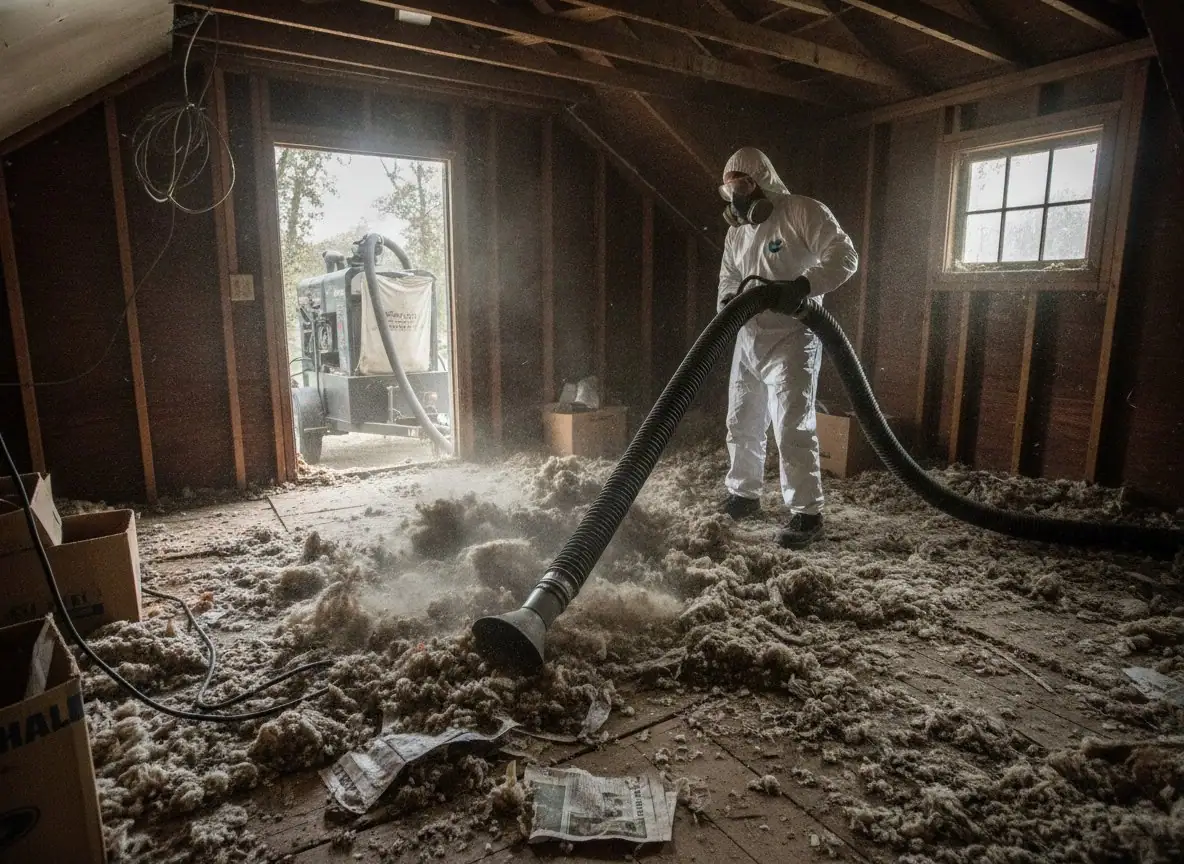
Signal Hill’s famous Signal Hill Oil Field, discovered in 1921 and once described as the most productive oil field per acre in the world, left a legacy of hastily constructed worker housing throughout the 1920s and 1930s. Many structures along Hill Street, Dawson Avenue, and the Panorama Drive corridor were built before modern insulation standards existed. These homes often have zero insulation in exterior walls and minimal or degraded vermiculite or loose-fill in attic spaces. Vermiculite installed before 1990 may contain asbestos — a specific hazard in Signal Hill’s oldest housing stock that requires professional removal before new Rockwool installation can proceed safely.
California Title 24 Compliance
Under California’s 2022 Title 24 Energy Code, Climate Zone 8 — which encompasses Signal Hill — requires minimum insulation levels of R-38 in attic assemblies and R-13 or R-15 in exterior stud walls for permit-pulled renovation projects. Rockwool Comfortbatt fits standard 2×4 cavities at R-15 and 2×6 cavities at R-23, satisfying or exceeding these requirements within a single layer. Failing to upgrade insulation during renovation projects not only increases energy costs but can trigger code compliance issues during final inspections at the City of Signal Hill Building and Safety Division.
Noise from Industrial and Traffic Corridors
Signal Hill borders the busy 405 Freeway interchange near Cherry Avenue and experiences elevated decibel readings — often 65–72 dB — along E. Willow Street and the industrial zones near the southern boundary with Long Beach. Rockwool’s acoustic properties reduce airborne sound transmission by an additional 10–15 dB compared to unfilled or fiberglass-insulated wall assemblies, making it a practical solution for noise-impacted neighborhoods like the Bixby Hills-adjacent blocks along Hill Street.
Free, no-obligation estimates
Talk to Clear Price Attic Insulation
Tell us what you need and we’ll take it from there.
Signs You Need Rockwool Insulation in Signal Hill
Thermal Comfort Indicators
- Rooms on the upper floors of hillside homes feel 8–12°F warmer than lower levels during summer afternoons
- Cold drafts near electrical outlets, window frames, or top-plate connections during winter nights when temperatures drop below 45°F
- Your HVAC system runs continuously for more than 20 minutes to maintain setpoint temperatures
- Uneven temperatures between rooms on the same floor — a sign of missing or compressed wall insulation
Moisture and Air Quality Indicators
- Visible condensation on interior walls or ceilings during Signal Hill’s June Gloom marine layer season (May through July)
- Musty odors in attic spaces or along exterior walls — a warning sign of mold growth within degraded fiberglass batts
- Allergy symptoms that worsen indoors, potentially indicating disturbed older insulation releasing particulates
Acoustic and Energy Bill Indicators
- Clearly audible traffic noise from Cherry Avenue or E. Willow Street through closed windows and interior walls
- Electricity bills exceeding $180–$220 per month for a standard 1,500 sq. ft. Signal Hill home during summer cooling months
- Gas bills significantly higher than neighbors in comparable homes during winter heating periods
Urgency Indicators
- Attic insulation that measures below 10 inches in depth (indicating less than R-30) — requires immediate upgrade for Title 24 compliance
- Any visible gray or silver granular material in attic spaces that may be vermiculite (potential asbestos risk — do not disturb; call us immediately)
Our process
Our Rockwool Insulation Installation Process in Signal Hill
- 01
Free On-Site Assessment (1–2 Hours)
Our certified technician visits your Signal Hill property to evaluate existing insulation conditions, measure current R-values using a calibrated depth probe, check for moisture infiltration with a thermal imaging camera, and identify any hazardous materials s
- 02
Hazardous Material Testing and Removal (If Required — 1–3 Days)
For Signal Hill homes built before 1980 — particularly those on Hill Street, Panorama Drive, and Dawson Avenue — we conduct or coordinate asbestos and lead testing per California OSHA requirements before any disturbance of existing insulation. Learn about our
- 03
Air Sealing (2–4 Hours)
Before Rockwool installation begins, our team seals all top-plate penetrations, electrical boxes, plumbing chases, and recessed light canisters with fire-rated caulk and expanding foam. This step is especially critical in Signal Hill’s older wood-frame constru
- 04
Rockwool Batt Cutting and Fitting (Half Day to Full Day)
We custom-cut each Rockwool batt to friction-fit tightly within stud bays, rafter bays, or floor joists without gaps, voids, or compression. Compressed insulation loses R-value proportionally — a 3.5-inch Rockwool batt compressed to 3 inches loses approximatel
- 05
Installation and Vapor Management (Half Day to Full Day)
Rockwool batts are installed facing the appropriate direction per California Climate Zone 8 vapor management guidelines. In Signal Hill’s coastal climate, we typically install unfaced Rockwool in wall cavities paired with a Class II vapor retarder on the warm-
- 06
Quality Inspection and Thermal Verification (1–2 Hours)
After installation, our technician conducts a post-installation thermal scan to verify complete cavity coverage and identify any missed areas. We document before-and-after R-value readings for your records and any permit files required by the City of Signal Hi
- 07
Cleanup and Final Walkthrough (1 Hour)
We remove all installation debris, vacuum attic and work areas, and walk you through the completed installation — explaining expected performance improvements and maintenance schedules tailored to Signal Hill’s coastal climate conditions.
Rockwool Insulation Methods and Approaches
Rockwool Batt Installation (Most Common for Signal Hill Retrofit)
Pre-cut semi-rigid Rockwool batts in widths of 15 inches (for 16-inch on-center framing) or 23 inches (for 24-inch on-center framing) are the most widely used method for Signal Hill retrofit projects. This approach works well in attics, open wall cavities during renovation, and floor joist bays in crawl space encapsulation projects. Explore our full attic insulation services
Rockwool Continuous Insulation (CI) for Exterior Walls
For Signal Hill hillside homes undergoing full exterior re-cladding — a common project in the Cherry Avenue and Creston Drive neighborhoods — Rockwool ComfortBoard rigid mineral wool panels can be installed as continuous exterior insulation over the sheathing, eliminating thermal bridging through studs. This approach adds R-2.5 to R-6.5 per inch without reducing interior living space.
Combined Rockwool and Spray Foam Hybrid Systems
In particularly drafty older Signal Hill structures, we often recommend a hybrid approach: a 1-inch closed-cell spray foam layer applied to the interior face of exterior sheathing (providing both air barrier and vapor control), followed by Rockwool batts filling the remainder of the stud cavity. Learn more about our spray foam insulation services This system achieves R-21 to R-24 in a 2×4 wall — well above Title 24 minimum requirements.
Rockwool in Crawl Space Applications
For Signal Hill homes with raised foundations — prevalent in the pre-1960 building stock — Rockwool batts installed between floor joists provide thermal and acoustic separation from the ground environment. This is often combined with a crawl space encapsulation vapor barrier system for complete moisture management in Signal Hill’s seasonally humid conditions.
Blow-In Rockwool (AttiCat or Loose-Fill Mineral Wool)
Where attic access is limited or joist bays are irregular — common in Signal Hill’s 1930s-era bungalows — loose-fill mineral wool can be blown in to achieve uniform coverage at R-38 or R-49 depths. See our blow-in insulation options
Rockwool Insulation Cost in Signal Hill, CA
Understanding Rockwool insulation costs helps Signal Hill homeowners plan budgets and evaluate proposals accurately. Below are typical price ranges for our service area based on current Southern California labor and material markets.
Typical Cost Ranges
- Attic Rockwool insulation (blown or batt, R-38 to R-49): $1.80–$3.20 per square foot installed, or approximately $2,700–$4,800 for a typical 1,500 sq. ft. Signal Hill home attic
- Exterior wall Rockwool batt installation (open cavity): $2.50–$4.50 per square foot installed, or $3,500–$6,300 for a full 1,400 sq. ft. wall surface renovation
- Crawl space floor Rockwool batt installation: $2.00–$3.80 per square foot, or $1,800–$3,400 for a 900 sq. ft. crawl space
- Rockwool continuous exterior insulation (ComfortBoard): $3.50–$6.00 per square foot installed
- Hazardous material removal (vermiculite or asbestos-containing material): $1,500–$4,500 depending on scope — this is a separate line item required before new installation in pre-1980 Signal Hill homes
Read moreShow less
Factors Affecting Your Signal Hill Rockwool Insulation Cost
- Attic accessibility — steep-pitched roofs common on hillside Signal Hill properties increase labor time
- Existing insulation removal requirements
- Total square footage and number of wall cavities requiring work
- Choice of R-value level and product line (standard Comfortbatt vs. SAFE’n’SOUND acoustic batts)
- Permit fees at the City of Signal Hill Building and Safety Division (typically $150–$400 for insulation permits)
Call (562) 784-7649 for a free, itemized quote specific to your Signal Hill property. We provide transparent, line-item pricing — no hidden fees.
Neighborhoods We Serve in and Around Signal Hill, CA
Signal Hill Hillside Core (Panorama Drive / Cherry Avenue Corridor)
The historic hillside core contains Signal Hill’s oldest residential structures, many dating to the 1920s and 1930s oil boom era. These homes feature balloon-frame or early platform-frame construction with little to no original insulation. We routinely perform complete wall and attic insulation retrofits in this area, including hazardous material screenings prior to installation.
Creston Drive and Walnut Avenue Neighborhoods
Mid-century ranch homes from the 1950s through 1970s dominate this area. Many have original fiberglass batts that have degraded to below R-11 effective performance. Rockwool replacement restores these homes to Title 24 compliance and dramatically reduces marine-layer moisture infiltration.
Signal Hill South (Willow Street Corridor Near Long Beach Border)
Closer to the industrial and commercial zones along E. Willow Street, residential structures in this corridor face elevated traffic noise and urban heat island effects. Rockwool SAFE’n’SOUND installations are particularly popular here for acoustic comfort improvements.
Nearby Communities: Long Beach, Lakewood, and Bellflower
We extend our Rockwool insulation services to the broader communities surrounding Signal Hill, including Long Beach’s Bixby Knolls neighborhood, Lakewood’s post-war tract homes, and Bellflower’s growing residential renovation market.
Rockwool Insulation Maintenance Tips for Signal Hill Homeowners
- Inspect attic insulation depth annually: Use a ruler to confirm insulation depth remains at or above 10.25 inches (R-38 minimum) each fall before Signal Hill’s cooler marine nights begin in October.
- Check for pest intrusion after rainy seasons: Signal Hill’s hillside terrain channels rodents seeking shelter during wet La Niña winters. Inspect attic access hatches and eave vents for signs of animal disturbance to Rockwool batts each March.
- Keep attic vents clear of debris: Signal Hill’s seasonal Santa Ana wind events (typically October–December) deposit eucalyptus leaves and fine debris into ridge and soffit vents — blocked ventilation causes moisture buildup that compromises even Rockwool’s hydrophobic performance over time.
- Seal any new penetrations immediately: If HVAC technicians, electricians, or plumbers access your attic or walls, have penetrations re-sealed with fire-rated caulk within 30 days to maintain air sealing integrity.
- Monitor interior humidity levels: During June Gloom season (May–July), maintain interior relative humidity below 60 percent using bathroom exhaust fans and kitchen range hoods to prevent condensation within wall assemblies.
- Schedule a professional thermal scan every 5–7 years: Infrared imaging identifies any settled or displaced Rockwool batts before performance degradation appears on your energy bills.
- Do not store items directly on attic insulation: Compressing Rockwool batts under stored boxes reduces effective R-value — install attic catwalks or plywood storage platforms to protect insulation integrity.
Why Choose Clear Price Attic Insulation for Rockwool in Signal Hill?
At Clear Price Attic Insulation, we’ve built our reputation in the Signal Hill and Greater Long Beach communities on one foundational principle: transparent, honest pricing with no surprises. When you call us at (562) 784-7649, you receive a detailed, line-item written estimate before any work begins — every material, every labor hour, every disposal fee itemized clearly.
Our technicians are trained specifically on Signal Hill’s unique building challenges — the oil-era housing stock, the coastal marine layer moisture dynamics, the Title 24 Climate Zone 8 requirements, and the acoustic demands of hillside living near major traffic corridors. We don’t apply one-size-fits-all solutions; every installation plan is developed for your specific property and performance goals.
Read moreShow less
We service all of Signal Hill’s neighborhoods as well as the broader South Bay communities including Long Beach, Lakewood, Carson, Bellflower, Norwalk, Cerritos, Compton, Lynwood, Paramount, South Gate, Wilmington, Harbor City, Artesia, Hawaiian Gardens, Rossmoor, Seal Beach, Los Alamitos, East Compton, and West Carson. Our deep local knowledge means faster project completion and better outcomes for your home.
Contact us today for your free, no-obligation Rockwool insulation assessment at (562) 784-7649.
FAQ
Frequently Asked Questions: Rockwool Insulation in Signal Hill, CA
How much does Rockwool insulation cost in Signal Hill, CA?
Typical installed costs in Signal Hill range from $1.80 to $4.50 per square foot depending on application type, access difficulty, and R-value requirements. A complete attic insulation upgrade for an average 1,500 sq. ft. Signal Hill home runs approximately $2,700–$4,800. Wall cavity installations during renovations typically cost $3,500–$6,300 for a full home perimeter. We provide free, itemized written quotes — call (562) 784-7649 for your specific estimate.
Is Rockwool better than fiberglass insulation for Signal Hill’s coastal climate?
Yes, in most Signal Hill applications. Rockwool’s hydrophobic fiber structure repels liquid water while allowing vapor to pass — a critical advantage during Signal Hill’s June Gloom marine layer season when relative humidity regularly exceeds 80 percent. Standard fiberglass batts absorb moisture, losing up to 40 percent of their rated R-value when wet. Rockwool maintains over 95 percent of its R-value even in high-humidity conditions.
How long does Rockwool insulation installation take in a typical Signal Hill home?
An attic-only Rockwool installation typically takes one full day for a 1,200–1,800 sq. ft. Signal Hill home. Full wall cavity retrofits during renovation can take two to four days depending on the number of wall surfaces involved. If hazardous material removal is required first (common in pre-1980 Signal Hill homes on Hill Street and Panorama Drive), add one to three additional days for abatement and clearance testing.
Does Signal Hill require a permit for insulation installation?
Yes, for most insulation work that involves changes to the building envelope, the City of Signal Hill Building and Safety Division requires a building permit. Permit fees typically range from $150–$400. We assist our clients with permit documentation and coordinate inspections on your behalf.
Can Rockwool insulation help reduce noise from the 405 Freeway and Cherry Avenue traffic?
Significantly. Rockwool’s noise reduction coefficient (NRC) of 0.90–1.05 makes it one of the most effective acoustic insulation materials available. Homes along Cherry Avenue and E. Willow Street that have upgraded to Rockwool in exterior wall cavities typically report a perceived 50–60 percent reduction in traffic noise intrusion — the difference between clearly hearing individual vehicles and hearing only ambient background sound.
My Signal Hill home was built in the 1930s. Do I have asbestos in my attic insulation?
Vermiculite insulation installed before 1990 — common in Signal Hill’s oil-era bungalows — may contain asbestos-contaminated material from the Libby, Montana mine operated by W.R. Grace. If you see silver-gray granular material in your attic, do not disturb it. Call us at (562) 784-7649 and we will arrange certified testing and, if necessary, safe removal by our licensed abatement partners before any new Rockwool installation begins.
Does Clear Price Attic Insulation serve areas near Signal Hill?
Yes — we serve Signal Hill and all surrounding communities including Long Beach, Lakewood, Bellflower, Carson, Compton, Norwalk, Cerritos, Artesia, Lynwood, Paramount, South Gate, Hawaiian Gardens, Wilmington, Harbor City, East Compton, West Carson, Rossmoor, Seal Beach, and Los Alamitos. See our full service area map
How does Rockwool insulation perform during Santa Ana wind events in Signal Hill?
Signal Hill’s elevated position makes it particularly exposed to Santa Ana wind conditions (typically October through December), which drive hot, dry air from inland deserts at speeds sometimes exceeding 45 mph. During these events, attic temperatures in poorly insulated homes can spike dramatically. Rockwool’s dimensional stability and non-combustibility are critical advantages — it will not shift under pressure differentials created by high winds, and it does not contribute fuel load in the event of ember intrusion, unlike some polymer-based insulation materials.
Get Your Free Rockwool Insulation Quote in Signal Hill Today
Don’t let Signal Hill’s unique coastal climate, oil-era housing stock challenges, or rising energy costs erode your home’s comfort and efficiency any longer. Clear Price Attic Insulation is ready to deliver expert Rockwool insulation installation with transparent pricing, professional craftsmanship, and results that meet California’s Title 24 standards for Climate Zone 8.
Whether you’re dealing with high summer energy bills, marine layer moisture in your walls, traffic noise from Cherry Avenue, or aging insulation in a historic Signal Hill bungalow, our team has the local knowledge and technical expertise to solve it.
Call us now at (562) 784-7649 to schedule your free, no-obligation on-site assessment. We serve Signal Hill, Long Beach, Lakewood, Carson, and all surrounding communities. Clear pricing. Real results. Right here in Signal Hill.
Get in touch
Find insulation help near you
Request a free estimate online or give us a call — our team will follow up quickly.
- Call us(562) 784-7649
- Visit1653 E 28th St #6, Signal Hill, CA 90755
- HoursMon-Sun 07:00-19:00