
Crawl space encapsulation is the process of sealing your home’s crawl space with heavy-duty vapor barriers, moisture control systems, and insulation to protect the structural integrity of your property and the air quality inside your home. For homeowners in Signal Hill, CA, this service is not a luxury — it is a critical investment given the city’s unique coastal proximity, marine layer humidity, and aging residential building stock.
At Clear Price Attic Insulation, we specialize in professional crawl space encapsulation tailored to the specific demands of Signal Hill properties. Whether you own a mid-century bungalow near the oil field district or a newer townhome on the hill’s upper slopes, our team delivers transparent pricing, expert installation, and lasting results. Call us today at 562-784-7649 to schedule your free crawl space assessment.
Understanding Crawl Space Encapsulation
Crawl space encapsulation involves installing a continuous vapor barrier — typically a reinforced polyethylene liner ranging from 10 to 20 mils in thickness — across the floor, walls, and sometimes the ceiling of a home’s crawl space. This barrier is sealed at all seams, around piers, and along foundation walls to create an air-tight or near-air-tight envelope that prevents ground moisture, soil gases, and outside air from infiltrating the living space above.
Historically, building codes in Southern California through much of the 20th century permitted open, vented crawl spaces with simple fiberglass batt insulation between floor joists. This approach was considered adequate during the drier inland building boom of the 1950s and 1960s. However, research from the Building Science Corporation and the EPA’s Energy Star program confirmed that vented crawl spaces in coastal and semi-coastal environments — like Signal Hill — actually draw in more moisture than they expel, creating persistent humidity problems that degrade insulation, rot wood, and encourage mold growth.
Read moreShow less
Modern encapsulation systems go well beyond a simple plastic sheet. A complete system includes a reinforced vapor barrier, perimeter drainage channels if needed, a sump pump or condensate drain, a conditioned or dehumidified air supply, and insulation applied to the foundation walls rather than the floor joists above. This approach transforms the crawl space from a liability into a controlled, semi-conditioned environment that supports energy efficiency and structural longevity.
Signal Hill’s housing stock is particularly well-suited — and in many cases urgently in need of — modern encapsulation. The city developed rapidly during two distinct eras: the oil production boom of the 1920s and 1930s, followed by post-World War II residential infill from the 1940s through the 1970s. Many of these homes feature raised foundations with crawl spaces that were built to the standards of their era, not today’s understanding of moisture science. As a result, a significant portion of Signal Hill’s single-family homes are candidates for encapsulation upgrades.
Why Crawl Space Encapsulation Is Needed in Signal Hill, CA
Marine Layer Humidity
Signal Hill sits directly in the path of the Southern California marine layer, a mass of moist ocean air that rolls in from the Pacific, particularly between May and September — a period locals call “June Gloom” that often extends well into July and August. During these months, relative humidity in Signal Hill regularly reaches 80 to 90 percent in the early morning hours. This moisture penetrates unencapsulated crawl spaces through soil evaporation and foundation vents, depositing condensation on floor joists, subfloor sheathing, and existing insulation. Over time, this repeated wetting and drying cycle causes wood to crack, warp, and become vulnerable to rot and fungal growth.
Expansive Clay Soils on the Hill’s Slopes
The soils underlying Signal Hill contain significant deposits of expansive clay, particularly along the western and southern slopes near Cherry Avenue and Temple Avenue. These clay-rich soils absorb water during winter rains — Signal Hill averages approximately 13 inches of rainfall annually, concentrated between November and March — and then swell and shift as they dry out. This seasonal movement elevates soil moisture levels directly beneath crawl spaces during the wet season, pushing vapor into unprotected crawl spaces. The 2016-2017 El Niño-influenced rain season, which brought nearly 22 inches of rainfall to the Long Beach area, caused a notable spike in crawl space moisture complaints and mold remediation calls throughout Signal Hill and the surrounding communities.
Aging Infrastructure in Established Neighborhoods
Neighborhoods like the historic residential blocks near Hill Street and California Place, as well as the mid-century homes clustered around Willow Street on Signal Hill’s northern face, feature homes built between 1945 and 1965. These properties commonly have original redwood or Douglas fir floor framing that, while durable, was not designed for modern moisture standards. Original vapor barriers in these crawl spaces — where they exist at all — are typically 4-mil or 6-mil polyethylene sheets that have degraded, torn, or shifted over decades of soil movement.
Oil Field Legacy and Soil Contamination Concerns
Signal Hill’s identity was shaped by the discovery of oil in 1921, and while active drilling has significantly diminished, legacy infrastructure and residual soil conditions from the Signal Hill Oil Field remain a background concern. Methane and other soil gases can migrate through unprotected crawl space soil, entering living spaces without a proper vapor barrier system. Encapsulation with a sealed liner provides an important barrier against these soil gas pathways.
HVAC Efficiency Losses
Many Signal Hill homes route ductwork through crawl spaces. When a crawl space is humid and uninsulated, ducts sweating condensation lose efficiency and deliver conditioned air that absorbs moisture before it reaches living areas. Encapsulation, combined with crawl space insulation, reduces this energy penalty significantly.
Free, no-obligation estimates
Talk to Clear Price Attic Insulation
Tell us what you need and we’ll take it from there.
Signs You Need Crawl Space Encapsulation in Signal Hill
Moisture and Water Indicators
- Standing water or mud visible in the crawl space after winter rains
- Condensation forming on HVAC ducts, pipes, or the crawl space ceiling (your subfloor)
- Efflorescence — white chalky mineral deposits — on foundation walls
- Damp or musty odors rising through floor vents or hardwood floors
Structural Warning Signs
- Soft, spongy, or bouncy floor areas — especially near bathroom and kitchen plumbing
- Visible discoloration, staining, or dark spots on floor joists or subfloor
- Deteriorating, clumping, or falling fiberglass insulation hanging from floor joists
- Wood rot on sill plates or beam ends where they contact the foundation
Indoor Air Quality and Health Indicators
- Unexplained allergy symptoms or respiratory irritation worsening at home
- Visible mold growth on baseboards or lower wall areas
- Pest activity — rodents and insects are drawn to moist, unprotected crawl spaces
Urgency note: If you observe standing water or visible mold, contact Clear Price Attic Insulation at 562-784-7649 immediately. Delaying encapsulation when active moisture intrusion is present can result in significant structural repair costs.
Our process
Our Crawl Space Encapsulation Process in Signal Hill
Our encapsulation process is methodical, transparent, and adapted to the specific conditions found in Signal Hill’s homes. Here is what you can expect from start to finish:
- 01
Free Crawl Space Inspection (Day 1 — 60 to 90 Minutes)
Our technician performs a thorough inspection of your crawl space, documenting moisture readings with a calibrated hygrometer, identifying wood damage, assessing existing vapor barriers, and photographing all areas of concern. We also note the crawl space dime
- 02
Detailed Written Estimate (Day 1 to Day 2)
Consistent with our Clear Price commitment, we provide a fully itemized written estimate with no hidden fees. You will see the exact liner thickness, brand, square footage, and any ancillary systems recommended.
- 03
Crawl Space Preparation and Cleaning (Installation Day — 2 to 4 Hours)
Before any liner is installed, we remove debris, old degraded vapor barrier material, and any standing moisture. If rodent activity is present, we coordinate with our rodent proofing team to address entry points before sealing the space.
- 04
Old Insulation Removal if Required (Installation Day — 1 to 3 Hours)
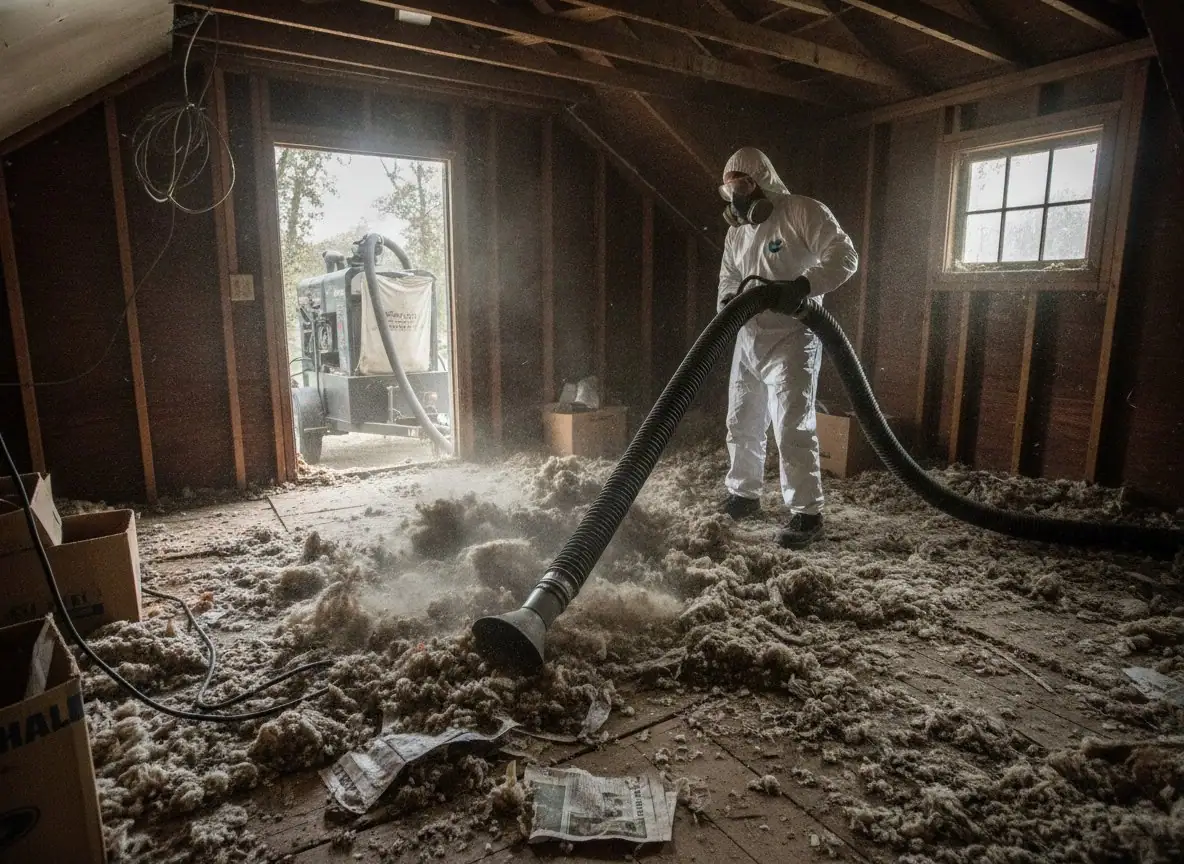
Waterlogged or mold-contaminated insulation must be removed prior to encapsulation. Our insulation removal service handles this step safely and completely.
- 05
Vapor Barrier Installation (Installation Day — 3 to 6 Hours)
We install a reinforced polyethylene liner — typically 12-mil for standard Signal Hill applications and up to 20-mil for properties with higher moisture loads on lower hillside exposures. The liner is lapped up foundation walls at least 6 inches and mechanical
- 06
Foundation Wall Insulation (Same Day or Following Day)
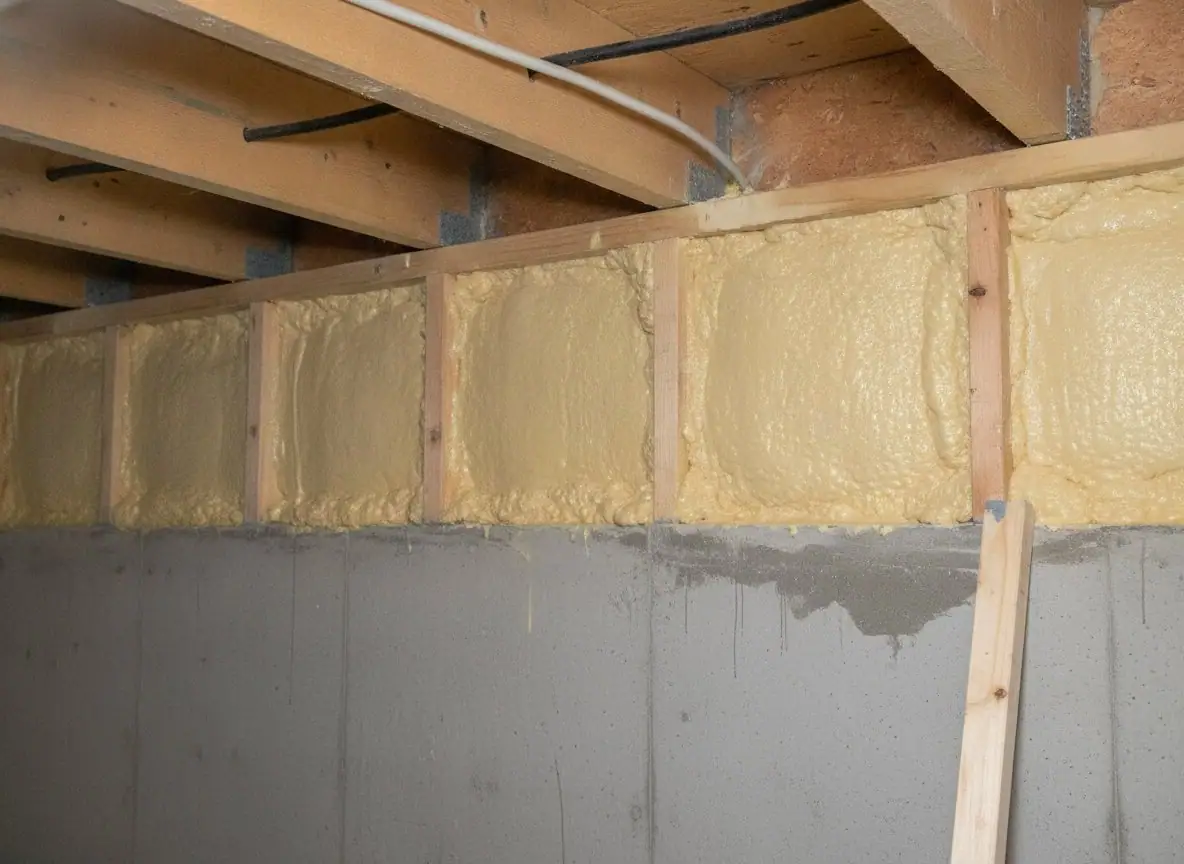
We apply spray foam insulation or rigid foam board to the interior of the foundation walls to eliminate thermal bridging and further reduce moisture migration.
- 07
Final Inspection and Moisture Reading Documentation (Day 2 — 30 Minutes)
We take post-installation moisture readings, review the completed work with you, and provide a written completion report you can keep for your records and future home sale disclosures.
Crawl Space Encapsulation Methods and Approaches
Full Perimeter Encapsulation with Conditioned Air Supply
The gold standard for Signal Hill homes with persistent humidity. A sealed liner covers all exposed soil and walls, and a small supply of conditioned air from the home’s HVAC system maintains the crawl space at controlled humidity levels. Best for homes on the western and southern slopes where marine layer exposure is highest.
Vapor Barrier with Standalone Dehumidifier
For homes where extending HVAC ductwork into the crawl space is not practical, we install a sealed liner paired with a dedicated crawl space dehumidifier rated for the space’s square footage. This approach works well in Signal Hill’s tighter hillside crawl spaces where duct routing is complex.
Partial Encapsulation and Vent Sealing
For homes that already have a partial vapor barrier but need foundation vents sealed and wall insulation added, we offer a targeted upgrade that improves performance without a full reinstallation. Appropriate for newer Signal Hill homes built after 1990 with less severe moisture problems.
Encapsulation with Integrated Drainage System
Properties on Signal Hill’s lower northern face near the E. Willow Street corridor, where seasonal water intrusion risk is elevated during heavy rain events, may benefit from a perimeter drainage channel installed beneath the liner that directs water to a sump pit before it can accumulate on the crawl space floor.
Crawl Space Encapsulation Combined with Floor Insulation Upgrade
After encapsulation, the crawl space walls are insulated rather than the floor joists, which is the thermally superior approach. For homes that also want added floor comfort, we can install blown-in insulation or fiberglass insulation as a supplemental layer.
Crawl Space Encapsulation Cost in Signal Hill, CA
Crawl space encapsulation in Signal Hill typically costs between $3,500 and $9,500 for a complete installation, with most single-family homes falling in the $4,500 to $7,000 range. Here is a breakdown of the primary cost factors:
- Crawl Space Size: Costs are often estimated at $5 to $10 per square foot for the vapor barrier installation alone. A 1,200 sq. ft. crawl space in a typical Signal Hill ranch home would cost approximately $6,000 to $12,000 for a full system.
- Liner Thickness: A 10-mil liner costs less than a 20-mil reinforced liner. For Signal Hill’s coastal humidity conditions, we typically recommend at least 12-mil, which falls in the mid-price range.
- Crawl Space Height and Access: Signal Hill’s hillside grading means some crawl spaces are very shallow on one side and deeper on the other. Tight access or low clearance under 18 inches adds labor time and cost.
- Old Insulation or Barrier Removal: Removing deteriorated existing materials adds $500 to $1,500 depending on volume and contamination level.
- Dehumidifier or HVAC Integration: Adding a standalone crawl space dehumidifier typically adds $800 to $1,500 to the project.
- Drainage System: A perimeter drain with sump pump adds $1,500 to $3,000 for properties with active water intrusion.
For a precise, no-obligation estimate specific to your Signal Hill property, call 562-784-7649. We believe in transparent pricing — every quote we provide is itemized so you know exactly what you are paying for and why.
Signal Hill Neighborhoods We Serve
Historic Hill Street Corridor
The residential blocks flanking Hill Street and California Place represent some of Signal Hill’s oldest housing stock, with many homes dating to the 1930s and 1940s. These properties frequently have original redwood sill plates and minimal or no existing vapor barriers, making them high-priority encapsulation candidates.
Willow Street and Northern Slopes
Homes along the northern face near E. Willow Street and Cherry Avenue tend to experience the highest groundwater infiltration risk during wet winters, given the natural drainage patterns that flow north off the hill. Many properties here benefit from encapsulation with integrated drainage solutions.
Signal Hill Terrace and Upper Elevation Homes
The higher-elevation properties near Temple Avenue and the Signal Hill Terrace neighborhood offer some of the city’s best views — and some of its most wind-exposed crawl spaces. Marine layer and diurnal temperature swings are more pronounced at elevation, accelerating moisture cycling in unprotected crawl spaces.
East Burnett and Spring Street Adjacent Areas
Closer to the Long Beach border, homes in the eastern portions of Signal Hill near Spring Street and E. Burnett Street include a mix of mid-century and 1970s-era construction. These properties often have partially updated crawl spaces that need a full system upgrade to current standards rather than minor repairs.
Crawl Space Maintenance Tips for Signal Hill Homeowners
- Annual Visual Inspections: Check your crawl space every fall before the rainy season for tears, displaced liner sections, or new signs of moisture. Signal Hill’s November through March rain window is your baseline risk period.
- Monitor Dehumidifier Function: If your encapsulation system includes a dehumidifier, check the reservoir or drain line monthly during the marine layer season (May through September).
- Maintain Perimeter Grading: Ensure the soil around your foundation slopes away from the structure at a minimum of 6 inches of drop per 10 feet to direct winter rainfall away from the crawl space.
- Clear Gutters and Downspouts: Keep gutters clear of debris, particularly after the palm seed and eucalyptus season in Signal Hill, and ensure downspouts discharge at least 4 feet from the foundation.
- Check Plumbing Penetrations: Periodically inspect supply and drain pipes in the crawl space for drips or slow leaks, which are the most common cause of localized encapsulation liner damage.
- Protect Access Hatch Seals: The crawl space access hatch is a common weak point. Ensure it is gasketed and sealed to prevent conditioned indoor air from exchanging with crawl space air.
- Professional Inspection Every Three Years: Schedule a professional crawl space review to assess liner integrity, check dehumidifier performance, and identify any new issues before they escalate.
Why Choose Clear Price Attic Insulation for Crawl Space Encapsulation in Signal Hill
At Clear Price Attic Insulation, we have built our reputation in the Signal Hill and greater Long Beach area on a single principle: honest pricing backed by professional workmanship. We do not use bait-and-switch estimates. Every quote is fully itemized, written, and explained before any work begins.
Our technicians are trained specifically in the moisture and soil conditions common to Signal Hill’s coastal hillside environment. We understand the difference between a home on the city’s north slope near Willow Street and one on the upper southern exposure near Temple Avenue — and we adapt our encapsulation approach accordingly.
Beyond crawl space encapsulation, we offer a full suite of insulation and home performance services including attic insulation, attic cleaning, spray foam insulation, and rodent proofing, allowing us to address the full picture of your home’s building envelope in a single, coordinated project.
Call us at 562-784-7649 to speak with a Signal Hill crawl space specialist and schedule your free on-site inspection.
FAQ
Frequently Asked Questions: Crawl Space Encapsulation in Signal Hill, CA
How much does crawl space encapsulation cost in Signal Hill?
Most Signal Hill homeowners pay between $4,500 and $7,000 for a complete crawl space encapsulation, though projects with drainage systems, dehumidifiers, or very large crawl spaces can reach $9,500 or more. We provide fully itemized written estimates at no charge so you know exactly what your investment covers.
How long does the encapsulation process take?
For a typical Signal Hill single-family home with a crawl space between 800 and 1,500 square feet, the installation is usually completed in one to two days. Larger spaces, complex access conditions, or projects that include drainage installation may require an additional day.
Do I need crawl space encapsulation if I already have a vapor barrier?
Many Signal Hill homes have original thin polyethylene sheeting (4-mil or 6-mil) on the crawl space floor. These older barriers typically do not cover the foundation walls, are not sealed at seams or penetrations, and have degraded over time. A true encapsulation system is significantly more robust and effective — a partial or deteriorated old barrier is not an equivalent substitute.
Will encapsulation help with my energy bills?
Yes. By reducing the humidity load on your HVAC system and eliminating the thermal short-circuit of a cold, damp crawl space, encapsulation typically reduces heating and cooling costs. Signal Hill homeowners who also upgrade to foundation wall insulation as part of their encapsulation project often see the most significant energy savings, particularly during the summer cooling season.
Is crawl space encapsulation necessary in Signal Hill’s climate, or is it mainly a cold-climate service?
Encapsulation is often associated with the humid southeastern United States, but Signal Hill’s marine layer-driven coastal humidity creates very similar crawl space moisture challenges. The high relative humidity during the June through September marine layer season is more than sufficient to cause wood damage, insulation failure, and mold growth in unprotected crawl spaces over time.
What happens to existing insulation when I encapsulate?
If your existing floor joist insulation is in good condition and dry, it can often remain in place. However, if moisture assessment reveals that the insulation is wet, compressed, moldy, or rodent-contaminated, removal is required before a new system is installed. Our insulation removal team handles this safely and efficiently.
Does encapsulation help with pests and rodents in the crawl space?
A sealed encapsulation system significantly reduces the entry points and habitat conditions that attract rodents, insects, and other pests to crawl spaces. We recommend pairing encapsulation with our rodent proofing service for maximum protection, particularly in Signal Hill neighborhoods near open brush areas on the hill’s perimeter.
How long does a crawl space encapsulation liner last?
A professionally installed, reinforced polyethylene liner of 12-mil or greater thickness, properly sealed and maintained, typically lasts 20 to 25 years or more. Annual visual inspections and prompt repair of any tears or penetrations are the key to maximizing liner lifespan in Signal Hill’s active soil environment.
Get Your Free Crawl Space Encapsulation Estimate in Signal Hill Today
If your Signal Hill home is showing signs of crawl space moisture, failing insulation, musty odors, or structural concerns, do not wait for the next rainy season to make the problem worse. Clear Price Attic Insulation is ready to help with professional crawl space encapsulation designed specifically for Signal Hill’s coastal hillside conditions.
We offer free, no-obligation inspections and fully itemized written estimates — no surprises, no pressure. Our team serves all Signal Hill neighborhoods, from the historic Hill Street corridor to the upper slopes near Temple Avenue.
Call us now at 562-784-7649 or visit our contact page to schedule your free crawl space assessment. Protect your home, your air quality, and your investment with Signal Hill’s trusted encapsulation specialists.
Get in touch
Find insulation help near you
Request a free estimate online or give us a call — our team will follow up quickly.
- Call us(562) 784-7649
- Visit1653 E 28th St #6, Signal Hill, CA 90755
- HoursMon-Sun 07:00-19:00